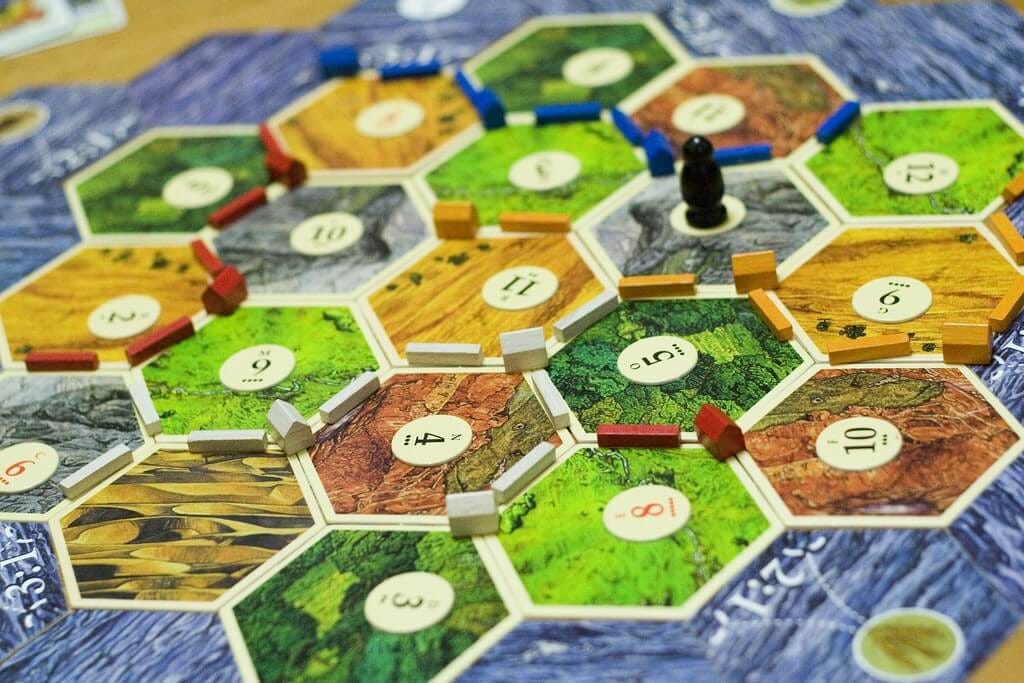
The “empty land myth” of so-called Catan is called into question by the inconvenient presence of indigenous people. Far from being vacant, people have been here for centuries, creating culture, forming communities, and using the land’s resources. When settlers arrive, their eyes set on conquest, the indigenous peoples are forced to defend their land and their way of life.
Settlers immediately face indigenous resistance. While settlers have technological advantages that allow them to quickly take advantage of resources in this “new world,” they are in a land that is not their own. New roads are torn up, settlements are destroyed, indigenous villages are erected in strategic locations, and raids are launched on settlers’ camps
The indigenous peoples of Catan have been here for centuries and know the land and its resources better than anyone. Settlements are dependent on the indigenous peoples for their knowledge and expertise. Some settlers may trade with the indigenous peoples, but it comes at a high cost. The indigenous peoples of Catan are wary of settlers’ attempts to exploit them, having seen the effects of colonialism on neighboring islands.
How do the rules change?
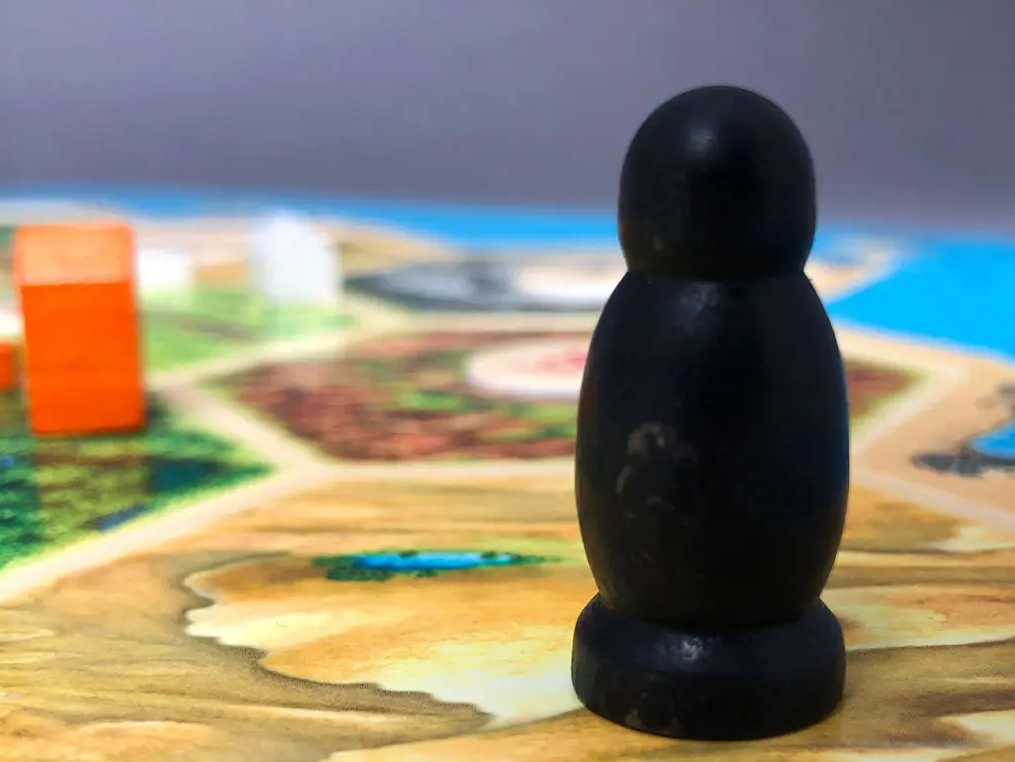
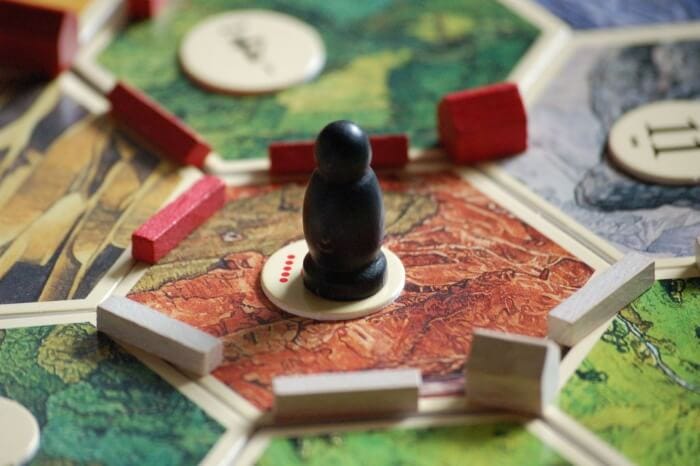
All normal Catan rules are in effect, though the black marker previously branded “the robber” by colonial settlers is a marker of indigenous activity. Pick a series of tokens that represent indigenous villages (the settlement markers of an unused color will work).
At Game Setup
At the start of the game, roll both dice to determine the location of a permanent indigenous village. Assign three resource cards matching that location to the indigenous people.
During Gameplay
At the beginning of each round, assign one resource card matching each location of an indigenous village to the indigenous people.
When a player rolls a seven, it signals indigenous resistance. When this happens:
- Indigenous people on the move: Move the indigenous peoples’ marker to the nearest location matching a drawn resource card.
- Armies discourage resistance: If players have two or more knights adjacent to that location, draw another resource card and move the indigenous peoples' marker there instead.
- Settlements and roads threatened: Wherever the indigenous peoples’ marker lands there is indigenous resistance. Remove the smallest adjacent settlement of the player with the most victory points and one connected road. If there is a tie over which settlement, roll dice to choose.
- Permanent indigenous villages: If the indigenous marker lands in a location with no adjacent settlements or if indigenous resistance removes the last settlement, a permanent indigenous village is built in the center of the location.
Players can voluntarily interact with indigenous villages on their turn:
- Trading with villages: Any player can trade with indigenous villages once per turn at a rate of 4:1 (4 identical resource cards for any 1 resource card). Trading with indigenous peoples protects their adjacent roads or settlements for one turn.
- Strikes against indigenous villages: Any player that has two or more knights adjacent to an indigenous village may roll, a 1-in-12 change to destroy the indigenous village. These people, forced from their homes, will relocate elsewhere. Draw resource cards until a nearby matching location without two or more knights is found. Move the village there. No adjacent settlements or roads are removed in the move. Unsuccessful strikes against indigenous people result in certainty of indigenous resistance on their next turn (even if the indigenous peoples’ marker has moved).
Ongoing Effects
Ongoing gameplay effects:
- No extraction: No resources may be drawn from a location occupied by an indigenous village or the indigenous marker.
- Settlements face resistance: Any settlements located on the edges of indigenous land will face a 50% chance of indigenous resistance once per round at the player’s turn (rolling once per settlement). In the case of indigenous resistance, another 50–50 roll will determine whether indigenous people take a random resource card from that player or remove the settlement altogether.
- Roads face some resistance: Roads at the edges of indigenous land do not face indigenous resistance. But roads that cut through contiguous locations of indigenous land face a 50% chance of indigenous resistance on that player’s turn (rolling once per road that cuts through indigenous land). In this case, if indigenous resistance is rolled, the road is removed.
Conclusion
You are now ready to play Post-Colonial Catan, a game that challenges you to think about the real-world consequences of colonialism. As you play, remember that the indigenous peoples of Catan are not passive victims; they are active agents who resist the encroachment of the settlers.
Colonialism has caused immense damage to indigenous peoples around the world. It has led to the displacement of millions of people, the destruction of their cultures, and the exploitation of their resources.
Post-Colonial Catan is a game that can help us to understand the legacy of colonialism and to think about how we can create a more just and equitable world.
As you play, consider the following questions:
- What are the ethical implications of trading with or exploiting indigenous peoples?
- How can we build relationships with indigenous peoples based on respect and reciprocity?
- How can we avoid repeating the mistakes of the past and create a better future for everyone?
Post-Colonial Catan is a game that can help us to start this important conversation.
Special thanks to Bruno Faidutti for his 2017 essay Postcolonial Catan.
References
- Faidutti, Bruno, et al. “Postcolonial Catan.” Analog Game Studies 2 (2017): 3–34.
Originally published on Medium, September 29, 2023.