a brief guide to riding the rails

what to worry about
Safety is a big deal on the railroad. It is real easy to get good and hurt. You are made of soft, breakable stuff, while railroad equipment is made of very hard, very heavy stuff. A rolling boxcar won’t even flinch as it quietly rolls right over you in a sneaky surprise attack.
Furthermore, accidents make everyone look bad. You, me, the railroad gal who told you what train to get on, all the people who saw you and were too cool to call the bull on you. This is why, everytime you talk to a rail, he or she will tell you to stay safe.
Don’t walk on the tracks. Don’t cross under couplers or cars. And watch for cars rolling quietly through the yard. Be careful out there.
Being wasted. or even somewhat drunk or high. while on or around trains increases your risk and the likelihood you will disregard the above rules and other safety practices around trains.
Some yards have a railroad cop, or “bull.” The bull typically sits in some office somewhere until someone calls him with a problem, which is seldom. Occasionally, the bull will make a foray out of the office to cruise around in a white pick-up or bronco, typically. In “hot” yards, the bull may proactively patrol the roads through the yard. To avoid the bull, stay out of sight of the roads within the yard. Walk between strings of cars. Watch for the bull mobile. Watch for flashlights. Stay out of danger. Steer clear of the office. Many smart riders adopt a sort of “ghost protocol” where if they are never seen, not only do they avoid getting caught, but also avoid putting workers’ jobs in danger.
what to bring
Keep everything dark — dark clothes, dark pack, dark sleeping bag or blanket. This will make it harder to get caught by the railroad cops as you blunder around the train yards.
You’ll be walking a lot and throwing your pack on and off of trains, so pack small and light — under 25 pounds. If you have something in your pack that can break, it will. Leave your valuables at home.
And think about warmth. Dress in layers. You may end up on an open car in the middle of the night with a 60-mile-an-hour wind blowing in your face. Your clothes and your sleeping bag should keep you warm and comfortable and dry. If you’re cold and wet, freight-hopping will be a miserable experience.
Bring some sturdy gloves and boots to keep you safe as you scramble around on freight cars. And if you prefer not to sunburn your ears and nose off, bring a hat.
It’s nice to know where you are. An atlas can come in handy, both for finding where to catch out and for finding out where you’ve been left. You may be able to round up a railroad map. Obviously, if you have cell service satellite maps are invaluable.
Bring something to drink. Exposure to the wind sucks the liquids right out of you. Bring something that’s not going to spill when you throw your pack on and off of cars.
Don’t forget to bring your patience. Freight-hopping involves as much walking and waiting as actual riding. You spend most of your time waiting for information, waiting for a train, waiting for your train to get underway, waiting, waiting, waiting. For this, you’ll need flexibility and patience. Here’s a quick checklist:
- dark clothes
- dark pack under 25 lbs
- sturdy gloves
- sturdy boots
- hat
- railroad atlas or map
- warm, waterproof jacket
- light, warm bedding
- water or other liquid
- non-perishable food
- patience and endurance
Don’t rely on networked electronics for obvious reasons.
where to catch-out
Find your local freight yard. There’ll be a train leaving or coming through there eventually. Look for train yards in the forgotten part of town, the part of town with all the rough neighborhoods. The yard is usually near big industry, maybe near a river or port. You can often find giveaway street names like Railroad Ave. The passenger train station is probably not too far away.
There are freight yards in almost every city in America. However, there are fewer marshaling yards where they make up and break down trains. These big yards are going to be the easiest places to gather information and catch out. Here you can ask the yard crew which trains are leaving where when.
Some yards are crew change points. A single crew can work a maximum number of hours, so yards at which trains receive fresh crews are strategically placed along the mainlines. These are good yards to catch out from.
how to get information
Railroad workers are your friends and will help you out whenever possible. Crews can usually only tell you where their train is going and when power’s called for. Yard workers often know the whole story. They make up all the trains that are leaving their yard. They know which trains are going where and often when the power is called for. They will sometimes call into the tower to find out what track your train is on and when it leaves.
what to ride
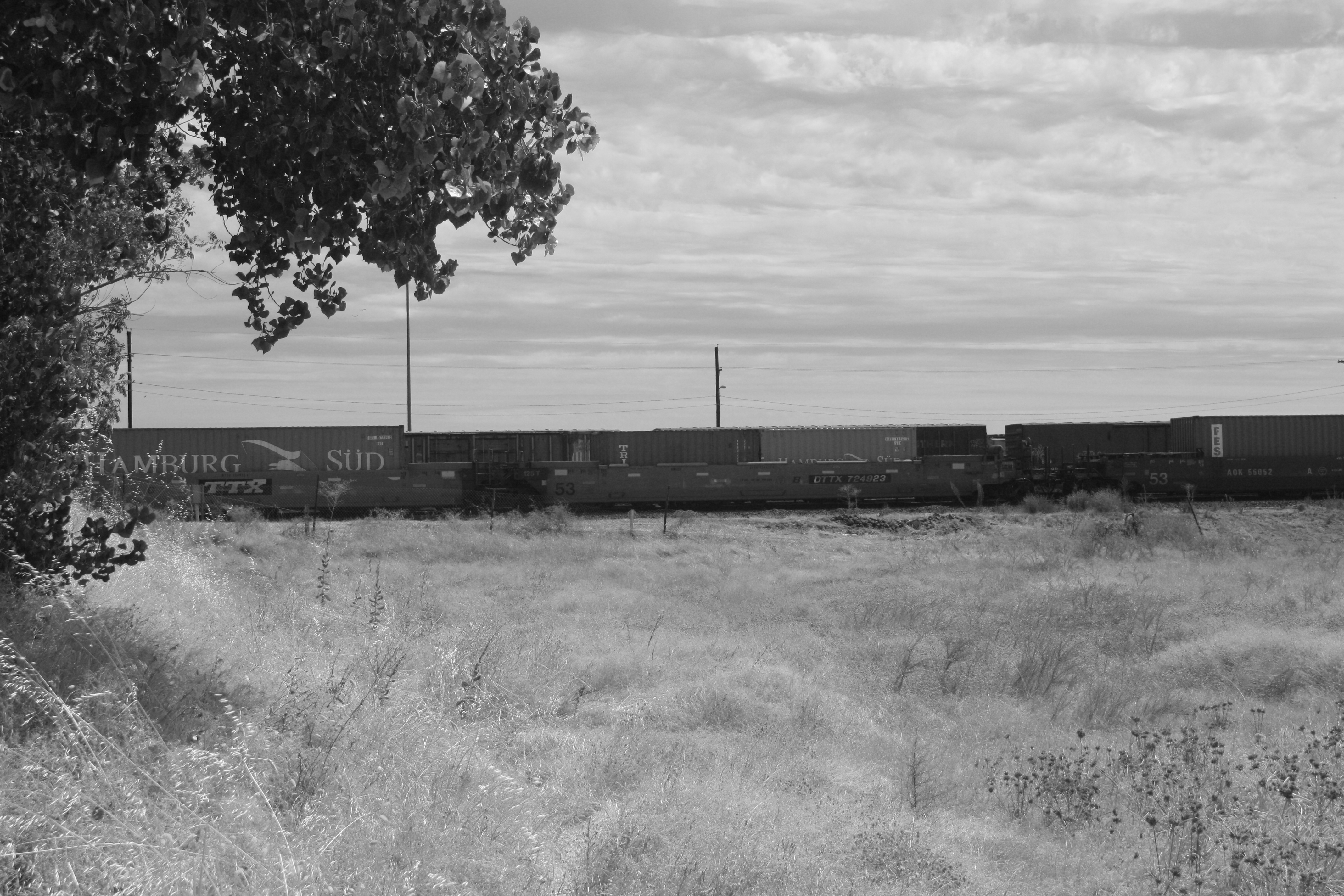
In order of preference, you want to ride in open boxcars, on the rear platform of a grainer or hopper, between the wheels of piggybacked trailers, in the well behind cargo containers, on the second or third deck of empty auto carriers, or in empty gondolas. And when you get really bold, you can ride on the back engine of several coupled units at night.
Your safety is the most important consideration. Don’t take shortcuts to save time. Tank cars carry all sorts of nasty shit and provide no good place to ride; don’t ride ’em. Loaded flatcars and loaded gondolas provide you the opportunity to be crushed or pushed off a car by a shifting load; don’t ride ’em. Cars marked Bad Order are broken but are frequently not removed from service; don’t ride ’em.