An Accounting of My Time in a Toxic Relationship with CalState University
Dear Students and Faculty Colleagues,
As you know, I value transparent communication and collaborative solutions, but these are only possible if we are honest with each other. I started to write you a small thank you and explanatory letter and it turned into a full article. Whoops. Hopefully, it will be helpful.
I just celebrated my five-year anniversary at California State University Monterey Bay, or at least that’s what the staff HR email told me. “On behalf of President Ochoa and University Personnel, I want to congratulate you for 5 years of dedicated service to the University.” I searched for words that would try to capture my feeling about the proposed ceremony, and after going back and forth, this is the best I could do: Throwing a party to celebrate my five years of exploitation at CSUMB feels like trying to candy-coat a turd.
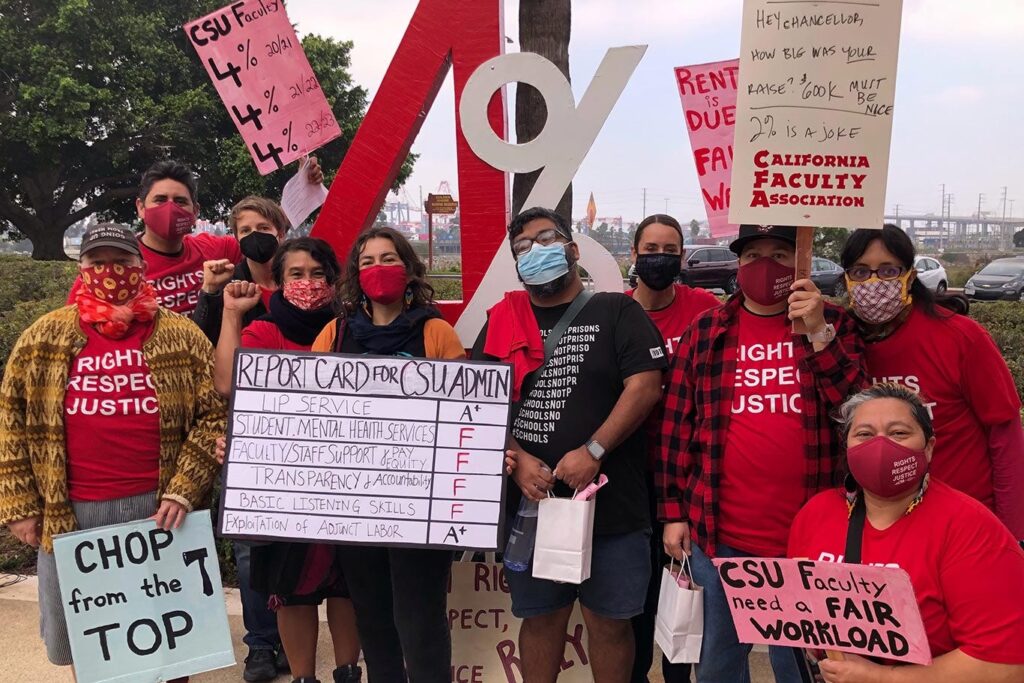
I always believe that it serves no one to remain silent about the struggles we face, and so I’ve tried to be vocal about the challenges of working under CSUMB’s administration. While our department has demonstrated care for our faculty and our students, I agree with the academic senate that our administration has shown a failure to create a culture of care, exemplified in a multitude of small and large ways. For five years, I’ve endured continuing disrespect from the administration of our school and of the CalState system. We have endured injuries around things like wages, job security, and safety, and endured insults on top of those injuries.
Here it is five years after I started at CSUMB. I have multiple degrees and more than 25 years in industry. As soon as I started in this department, I began teaching full-time a handful of required courses critical to the major, and soon completely updated the design of those courses. I have consistently contributed to the department, helping with curriculum, reviewing candidates, evaluating MLO‘s, volunteering at events, mentoring students, and sponsoring student groups, all with excellent feedback from students and faculty. The chair and faculty of my department are exceptional, offering a level of compassion, care, and concern for each other and for our students I’ve not experienced elsewhere. That has been a bright spot in my dark time at CSUMB.
Five years after I began here, the tenure track line I was encouraged to hope for, year after year, failed to manifest — always, maybe next year. Despite our program not having enough teachers to teach our courses, despite our more populous and popular CS sister program getting tenure lines, and despite our chair’s strong desire to provide me and the program with more stability and compensation, no tenure track position was forthcoming. Four years in, I started to question whether I was really interested in committing to a university seemingly unwilling to commit to me, nay willing to exploit me mercilessly, even after nearly half a decade of my best labor.
Five years at CSUMB and I, like every adjunct I know, am still at the very lowest pay scale for adjuncts, unchanged from when I started in 2017, with no clear path for promotion. I net $21/hr as an instructor at CSUMB. My partner who worked in a restaurant as a prep cook made more than I do. I make close to the average pay of a 7-Eleven assistant manager or a Starbucks shift leader. It is what some migrant agricultural workers are currently making. Given the job requirements and responsibilities, this is not only insulting but casts doubt on the claim that CalState prioritizes the welfare of its students, as this creates an inherently unstable faculty workforce.
The lack of willingness to address this in a substantive way is a sustained injury. Even the raises negotiated by our faculty union are wholly inadequate. The 4% raise recently negotiated increases my hourly by 14 cents an hour. If my employer paid me $21/hr and offered to give me a $0.14/hr raise, I’d laugh in their face. And this is the big win union members were prepared to go on strike for.
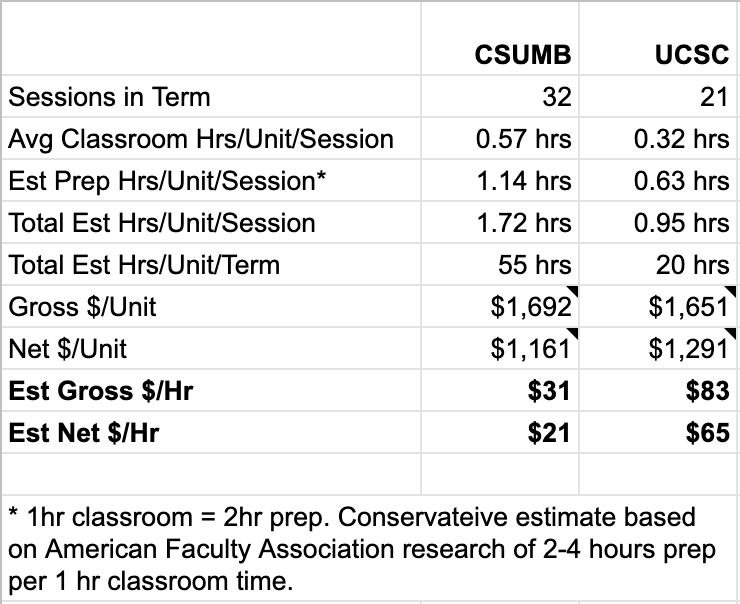
The recent EO1100 change from mostly 4-unit classes to mostly 3-unit classes cut many of our salaries by a quarter. After this change, I was forced to take on an additional course just to maintain benefits. While we were told breezily to trim the content of our classes as appropriate, no resources were made available to redesign or limit the scope of our classes. In no case that I know of, was the scope of courses as represented by course catalog descriptions systematically reviewed and revised. So, for most of us, we are teaching the same classes, but being paid only 75% of what we made two years ago. No acknowledgment was ever made by the administration that this was an effective pay cut. In fact, in our last meeting with the college Dean, he strenuously objected to that language, saying the 25% reduction in our salaries was not to be considered a “pay cut.”
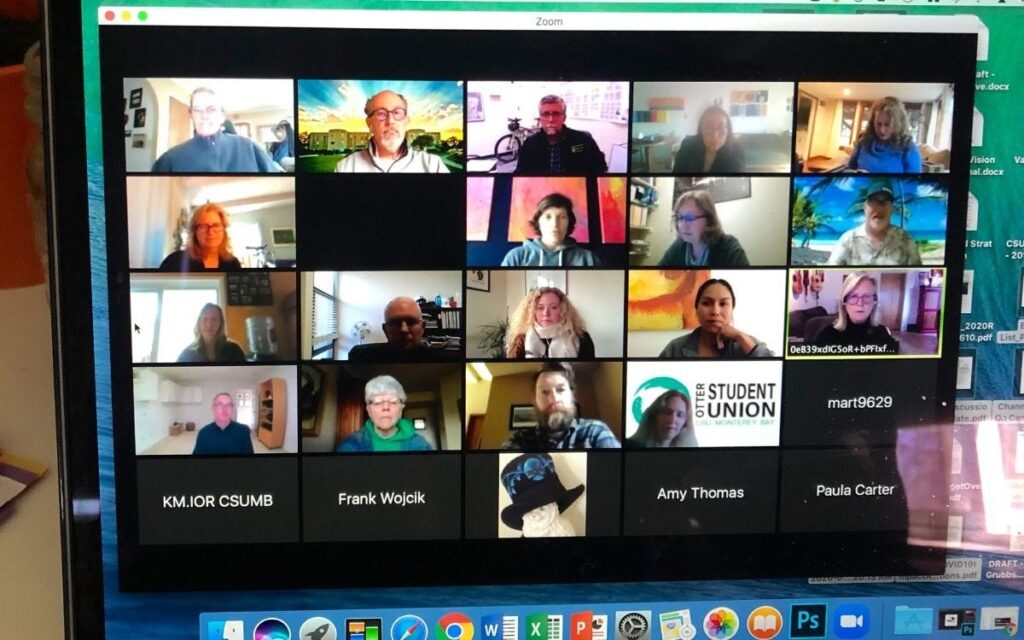
CSUMB’s response to the pandemic was shockingly inadequate. Most decisions dealing with the pandemic were last minute, non-transparent, and without any participation of faculty and staff. The burden of continuing the work of the university was shifted onto the backs of faculty without regard to their situation. The cost of providing necessary computers, internet bandwidth, and home offices was wholly shouldered by remote faculty without offer of compensation. No additional compensation was offered for the additional time spent prepping, recording, editing lectures, answering anxious student emails, Zoom meetings with faculty, TAs, and students. When we returned to in-person learning, the burden of public safety was shifted completely to departments, instructors, and students, with virtually no help from the administration. Instructors were expected to serve as public safety police. Outside of our classrooms, little help arrived. Administrators abdicated even the basics of public health, leaving students to manage their own isolation and quarantine, with contact tracing non-existent and vaccination proof unenforced.
On top of the difficulties of remote teaching at Zoom University, the administration inexplicably and unilaterally announced that in the midst of a global pandemic it was choosing this moment to change the platform upon which most teachers kept their classes, from iLearn/Moodle to Canvas. Naturally, no financial compensation was offered for the massive amount of work that suddenly fell on the shoulders of teaching faculty. Instead, we received empty assurances that there would be tools and support and that the transition would be virtually seamless. In reality, most classes had to be rebuilt or significantly restructured to accommodate the new learning management system. While the change may have been necessary, the timing and the lack of acknowledgment of the work required by faculty again demonstrates the lack of care the administration has for faculty, students, and staff.
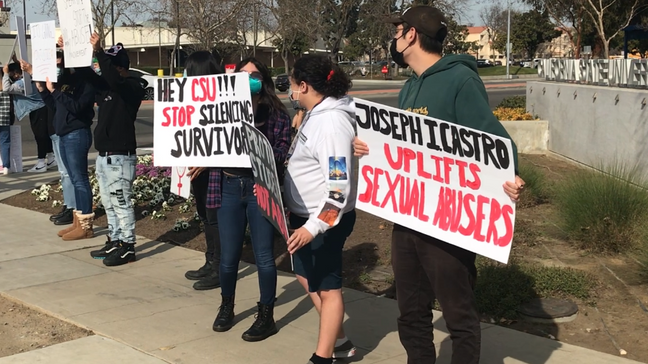
The recent revelations that the Chancellor of the CalState University system had not only protected his Fresno State protege from multiple sexual harassment, bullying, and retaliation complaints, but promoted, recommended him for president of another CSU, and quietly paid him hundreds of thousands of dollars upon his departure is both shocking and unsurprising. This discovery sat side-by-side with Chancellor Castro’s concerned and sincere emails about Title IX issues and his defensive and factually-twisted emails after the scandal was made public make me ill. This is the system, truly rotten at the top, that purports to care about students, staff, and faculty.
But beyond these major things, there are numerous minor insults added to these injuries, incidents, and ongoing harms that almost seem petty except that they steadily decreased my pleasure of working at CSUMB and convinced me that beyond my chair, the administration above our department did not share the same commitment to students and faculty we held.
When a Diversity, Equity, and Inclusion Committee was formed in my academic college, I jumped at the opportunity considering this work important. It soon became apparent that the committee was composed primarily of staff and senate faculty. I was the only adjunct faculty. Everyone in the room was being paid for their time there, either as part of their staff jobs or with a possible release as tenure-line faculty. So for some members of the campus community, working on the DEI committee is paid work, but for an adjunct, no compensation for their time and work was offered. When I asked about it, I was told no funds were available for participation. The large teaching responsibility I’d taken on in order to survive inevitably conflicted with my DEI committee work. CSUMB adjunct faculty already work very close to the poverty line (Flaherty, 2020; Glasmeier, 2022) and statistically are the most likely to be POC and non-gender-conforming (Flaherty, 2016). To be clear, the Diversity, Equity, and Inclusion committee of my college is asking the most vulnerable members of the academic community (and statistically the most likely to be POC) to work on DEI issues for free. That’s a perfect example of structural inequality, a cognitive dissonance that I hoped would be apparent to the committee.
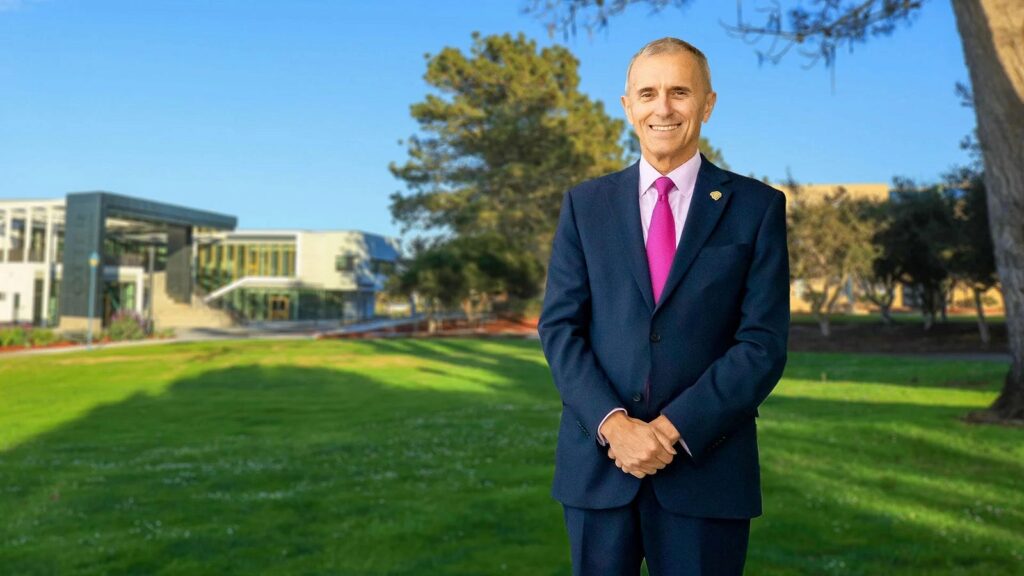
Over the years, I have raised a half dozen concerns with President Ochoa’s office. Never once, in five years, have I received a response. In fact, during our union campaign, during which we were encouraged by faculty union to respectfully “at” President Ochoa and the CSU trustees on social media, President Ochoa blocked me (and the entire union, I later learned) from his public Twitter account, effectively silencing dissent from faculty and staff. As a public figure of a public university, this is possibly in violation of recent court decisions (Peters, 2019). These demonstrations of a lack of transparency, accountability, and willingness to engage erode faith in the institution.
In another small example, I received a parking ticket on campus with a valid disability placard in a disabled space. After I disputed the ticket, the parking office refused to dismiss the ticket and refused to call an administrative hearing with an independent referee as required by law. I made five formal requests for an administrative hearing, and the matter stopped at the Parking Office Manager and would go no further. The president’s office didn’t respond. The general counsel’s office has no interest in enforcing the rules. There is notoriously no ombudsman at CSUMB, so there is no one to go to. The message is clear: There is no accountability at CSU.
A few years ago, I had a pair of strange and disturbing encounters with campus police. A CSUMB officer was investigating an incident and asked to interview me about it. I was happy to talk with him, but the officer was disrespectful and suspicious. I had no idea what the officer was investigating, but there was no call for him to treat one of his interviewees with disrespect, so later I called the department to file a formal complaint. I talked to a CSUMB sergeant who said she would talk to the officer and call me back. She never did. Weeks later, I talked to her again and she dismissed my concern and discouraged me from filing a formal complaint.
A year later, I was in my car waiting for a parking space to open up when an officer rolled up in his patrol car and told me that I needed to leave. I pointed out that I was not the only vehicle waiting and that a spot would likely open up in a second. He said, “But I’m telling YOU that you need to go.” I suspected that the officer believed I was unaffiliated and targeted me based on class and age bias. Because of my previous negative experience with campus police, I did not bother to file a formal complaint because I had zero confidence that anything would come of it. I assume that these experiences are shared by other members of the campus community. It reinforces my understanding that those in power at CSUMB are answerable to no one.
Recently (late April 2022), staff and faculty received a disturbing letter from the office of the president. The letter started off by saying that there were no threats and absolutely nothing to worry about. Uh oh. It then went on to report that during a campus event, a loaded magazine from a semi-automatic weapon was found and turned in to campus police. Next President Ochoa reports, “University Police contacted all individuals seated in the immediate vicinity of the location where the magazine was found. After the search, Police did not identify any other contraband or potentially dangerous materials. Lacking further evidence, no indication or potential threats of violence, and having no suspect, Police cleared the area, and normal operations resumed.” It repeated twice more that there was nothing whatsoever to worry about. Wait, what? In an era when school shootings are a weekly occurrence in the U.S., a loaded firearm magazine was found during a campus event, and police looked around, didn’t find an active shooter and so concluded there was no danger? What kind of upside-down world are we living in? After this, and the lack of any consequences whatsoever for campus police or the president’s office, I no longer felt remotely safe on campus.

Just this year, after several cases of food poisoning on campus, an email went around to staff and faculty to avoid the campus Dining Commons (or the DC as my students call it). Since our return to in-person teaching (and a change of campus food vendor), I’ve noticed a significant drop in the quality of the food at the DC. I’m not a picky eater, and yet I considered my meal inedible, going so far as to ask for a refund on my meal. Now we had to watch out for food poisoning? Color me unsurprised. This echoed the concerns of my students, who told me the on-campus food was terrible, and that they stuck with pre-packaged sandwiches from the on-campus Starbucks whenever possible. CSUMB’s new food vendor, Chartwells Higher Education, is notorious for unpalatable food and unresponsive management according to employee reviews on Glassdoor and Indeed. CSUMB was already at the center of a food desert, with the nearest market 45 minutes away by foot, and 20 minutes away by public transit. There are no markets on campus, no affordable decent restaurants, just packaged foods from the snack store, the DC, and the Starbucks. Even the food trucks that used to visit campus are no more. Chartwell’s has negotiated exclusive vendor contacts with many of the CSUs, and so likely with CSUMB. This lack of concern from campus management for this basic aspect of campus life was worrisome.
These things feel both minor and cumulative. The lack of IT and academic support from the administration, the ongoing financial precarity of contingent faculty, the unresponsiveness of administration to faculty concerns, the lack of accountability and transparency in the management of the university, these things are like an ingested poison whose increasing effects are observed with time. The longer I stayed at CSUMB, the more I felt like the school was poisoning my love for teaching, my camaraderie with my fellow teachers, and my joy at seeing my students learning.
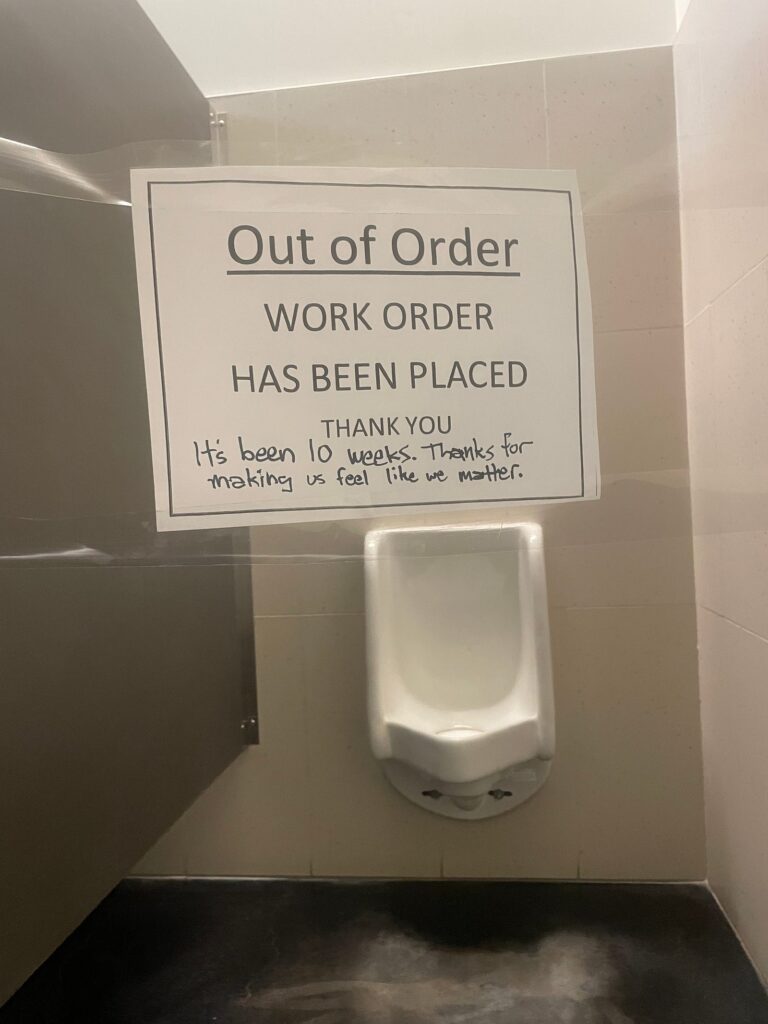
In March 2022, nearly 100 faculty of the Academic Senate offered an open letter to CSUMB’s administration with the understated title, “Letter Outlining Faculty Concerns and Desired Actions” detailing 38 serious campus problems and potential solutions (Kenny, 2022). It was validating to read, as I had experienced many of these issues but have never heard anyone else speak out about it. President Ochoa rapidly offered an acknowledgment of the letter promising to address each concern. While acknowledgment is an important part of maintaining morale, it is only a small part of the larger picture of treating students and faculty with respect. “Creating a culture of care,” to use the words of the letter, involves so much more, including feeling heard by the administration, having our concerns taken seriously, and being fairly compensated for the work we do.
To no one's surprise, after nearly 2 months, President Ochoa failed to offer a substantive response. On May 10th, the Academic Senate passed a sweeping resolution that put the administration on notice and established a timetable for the new incoming president to deliver plans for resolving on-campus housing issues, pay inequality, lack of affordable childcare, and establishment of a funded independent ombudsman office.
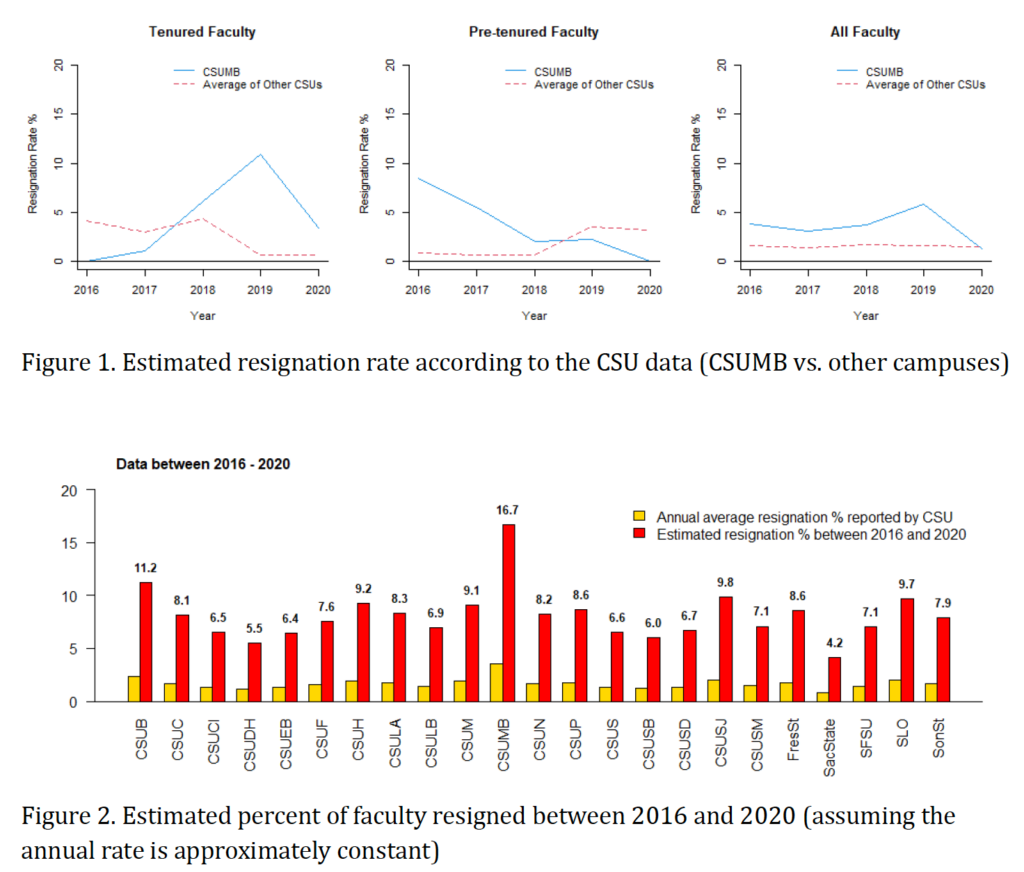
For the last few years, I’ve been trying to understand exactly how I was working so hard and yet still falling behind. Why did the university not even classify me as full-time, yet I was working well over 40 hours a week? Why did I have 3, even 4 classes a term and still couldn’t make ends meet? Why did my union keep telling me it was making huge gains on my behalf yet I still couldn’t feel it? I was feeling like I was being gaslit. I began keeping a spreadsheet calculating exactly how much I made at CSUMB per year, per semester, per course, per unit, per hour, and how much I made at other universities. I also had a sheet that showed how many additional courses I would have to teach elsewhere to leave CSUMB and still survive. In the interim, I tried to make sure I did my best to offer the institution an opportunity to address the issues I saw. I let my chair, my Dean, the Academic Senate, and the Office of the President know about my experience. I’ve tried to do my best to leave a better environment for my faculty peers and my students.
And as luck would have it, in the depth of my despair, I was offered just enough new courses at another university that I could survive after I left my toxic relationship with CSUMB. The rows and columns of my desperate spreadsheet told me it was time to jump. So…
After five years, I’m out.
References
Flaherty, C. (2016, August 22). Study finds gains in faculty diversity, but not on the tenure track. Inside Higher Ed. Retrieved May 6, 2022, from https://www.insidehighered.com/news/2016/08/22/study-finds-gains-faculty-diversity-not-tenure-track
Flaherty, C. (2020, April 20). New report says many adjuncts make less than $3,500 per course and $25,000 per year. Inside Higher Ed. Retrieved May 6, 2022, from https://www.insidehighered.com/news/2020/04/20/new-report-says-many-adjuncts-make-less-3500-course-and-25000-year
Glasmeier, A. K. (2022). Living Wage Calculator — Living Wage Calculation for Monterey County, California. Living Wage Calculator. Retrieved May 6, 2022, from https://livingwage.mit.edu/counties/06053
Kenny, T. (2022, March 18). CSU Monterey Bay faculty voice concerns over administration. Monterey Herald. Retrieved May 11, 2022, from https://www.montereyherald.com/2022/03/18/csu-monterey-bay-faculty-voice-concerns-over-administration/
Peters, J. (2019, July 22). Public Officials: Beware Blocking Critics on Social Media. American Bar Association. Retrieved May 6, 2022, from https://www.americanbar.org/groups/litigation/committees/civil-rights/practice/2019/blocking-social/
Update 5/11/2022: This article was updated to reflect the Academic Senate’s response to the administration’s failure to address the “Letter Outlining Faculty Concerns and Desired Actions” of March 14, 2022, and to add a reference to the original Academic Senate letter.
Originally published on Medium, May 6, 2022.