A perpetual journey to find our people and our place in the world
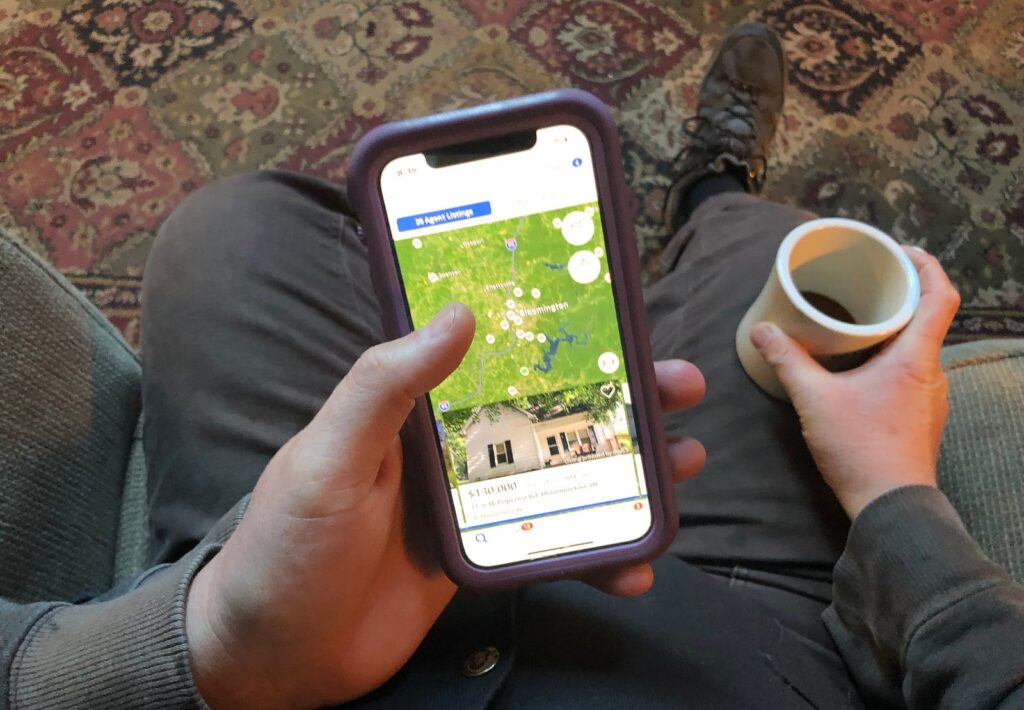
Maybe it is the stir craziness of pandemic lockdown, but I spend a lot of time on Zillow. Instead of doom scrolling, I find myself on real estate sites trying to picture myself living another life in another location. Could I live here? Is there enough space? Enough community? Is it far enough from the maddening crowds? Is it close enough to culture and work? Does it have a cool old barn? I have saved searches sending me new places to check out daily. I‘m scrolling on Google maps and looking at demographic data and maps of election results.
I sometimes feel a painful longing for the sound of a rooster in the morning and crickets at night, the smell of cut summer grass at 8 am and the crispness of the air early in the morning on a hot summer day, the sound of a thunderstorm and the sound of a distant train, music drifting across a field, or the cool feel of a barn even when it’s sweltering outside.
And honestly, it’s not like I don’t already live in paradise, or that I want to leave, or that I have the resources for a second house somewhere. But like a lot of folks, I suppose, I’ve been obsessed with the questions “How do I find a place that inspires me?” and “Who are my people?” These are questions I’ve asked most of my adult life.
Among the people I know, these are the critical questions. And we ask them of each other. Mostly, they are Millenials who have never been tied to place, who are mobile due to the vagarities of economics. They’ve been pushed out of places due to gentrification. They’ve low/no-budget traveled in their 20s so they’ve been around and seen a bunch of places. They’ve lived in New Orleans in a punk house for a month. They’ve slept on couches in Brooklyn. They WOOFed in North Carolina. They are of a generation that still dares to dream of finding their place in the world, but are realistic enough to know that the search may be disruptive and painful. Maybe, that’s you too.
Update: At the suggestion of a close friend, I wanted to acknowledge both my privilege as a person who has choices about where and how to live and to acknowledge the indigenous people whose land this is on which I travel.
I’m a little older than my friends. Most Gen-Xers like me have settled. Settled into a blue- or white-collar job, seemingly happy to find a place, any place in the economy, in the world. Though I’ve lived in this one coastal California county for three decades, it is hard for me to settle. My people were nomadic. I come from a long line of Navy people who moved around a lot, so I am not automatically tied to a place. I’ve lived from Massachusetts to California and several places in between (but mostly here, albeit a whole slew of places in Cali).
My mom lived in Los Angeles for a time. More urban than suburban. So I’m drawn to the hustle-bustle, the activity always going on around me. I went to school with Black and Brown kids. And while the sassy Black girls with their quick slapbacks scared the shit out of this little insular white kid, that discomfort feels familiar. I am more comfortable being around people who are different than me. Homogeneity makes me uneasy.
Meanwhile, my grandparents had a house out in the dry country far outside L.A. where crickets sang at night and I could hike or bike through golden fields for miles in any direction. My grandpa’s familiar refrain, “I’m headed to town. Need anything?” So I’m also drawn to wide expanses, open fields, barns with metal roofs, and dirt and gravel roads disappearing into the dusty distance.
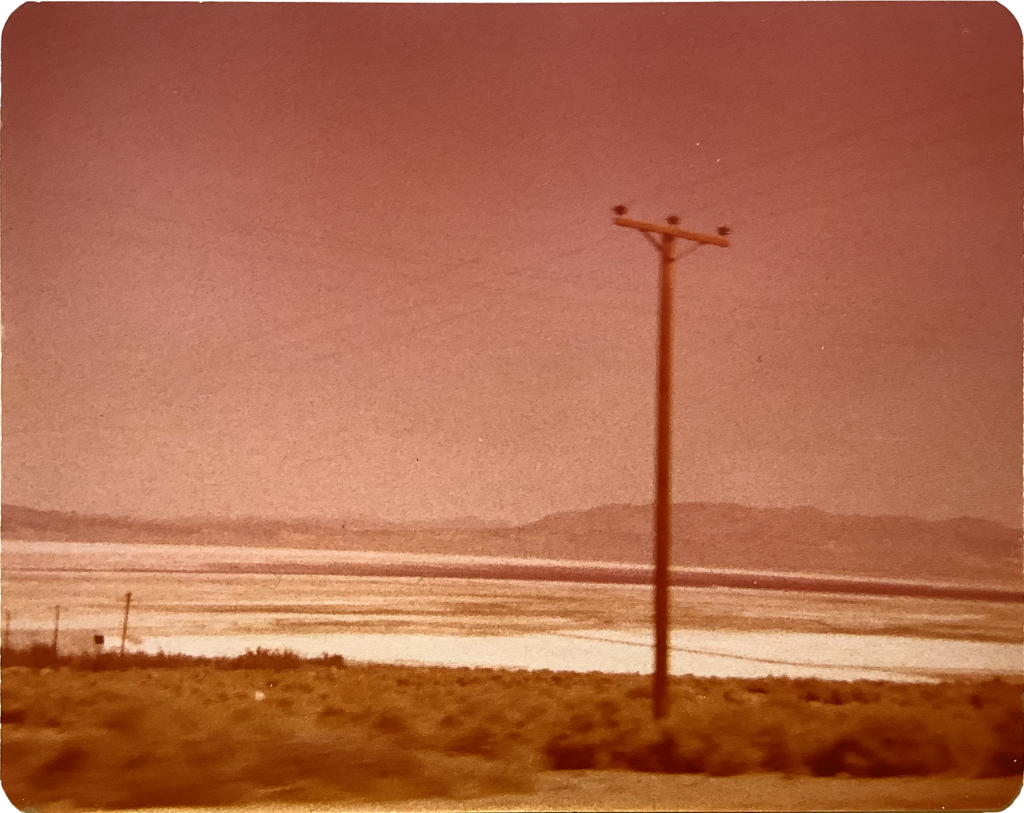
My grandparents were of the Great Generation and both served in World War 2, my grandfather as a medic in the Pacific Theater and my grandmother at home working in an ammunition factory. When they came back from the war, they bought a trailer in the post-war boom and traveled the country in the summers, visiting friends and relatives. From a young age, I was traveling the nation with my grandparents. That travel culture and this big, beautiful, diverse country made a huge impression on me.
Could I live here?
I look at people going about their daily lives in generic suburban hell, or at some urban mall in a big city, or in a small town in the obscure middle of a flyover state, and I wonder, “How the fuck did that person end up here?” Why here and not somewhere else? Are they happy here? Does this place help them meet their full potential? I think I’m asking that because I am perpetually asking that question of myself. And I wonder, looking at their little town or suburb or city, could I live here?
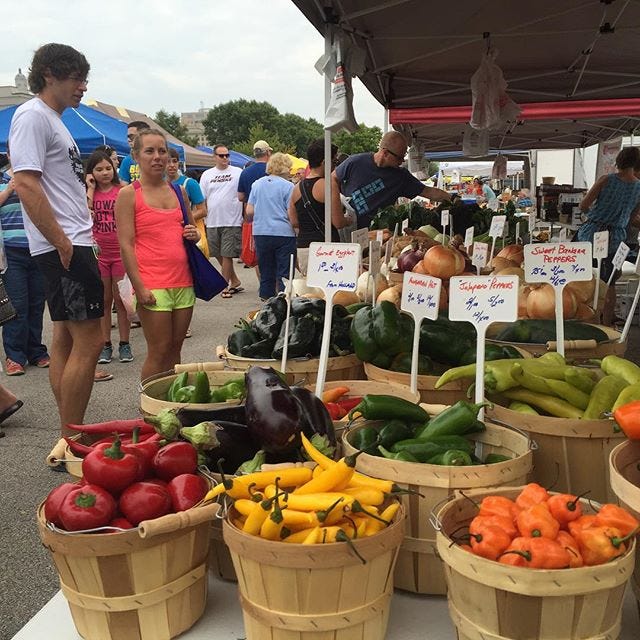
Practically, I guess, it's a matter of chance. People are born or raised somewhere and stay. Or people get a job that takes them somewhere. Or they find an affordable house near where they can find work. Or they’re in the service and they stay the last place they are deployed. Or they follow a girl or a boy somewhere and end up staying there. Or, like me, they go to college and forget to leave.
Despite the wanderlust of my friends, Americans are moving less than at any time since the Census Bureau started keeping track. For the past five years, just over 40 million Americans moved each year, about 13 percent of Americans. By comparison, in the 1950s, about 20 percent of Americans moved each year. Of the folks moving around these days, most move within the same county or state. Higher rents in big cities and lower-wage jobs mean few can afford to move to the big city to discover new opportunities.
I mean everybody has to live somewhere. And not everyone can live in the same place. But when I look at all these people living their lives, influenced by and influencing the places where they live, all those stories, I get a sense of vertigo. It’s overwhelming to think about. Perhaps, my thesis question is just a futile way to attempt to bring some reason to pure chaos.
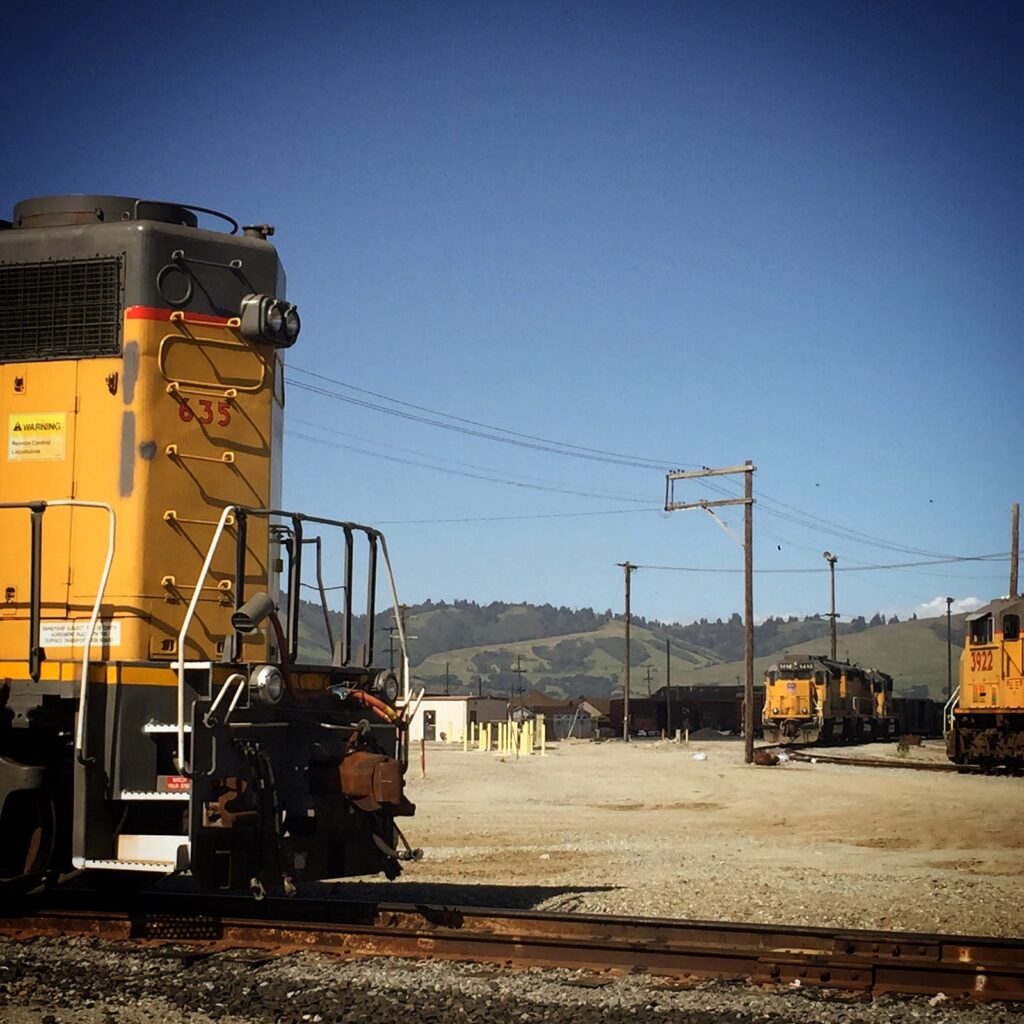
I’ve only had a real job with non-poverty wages a few years of my life. So despite my wanderlust, a plane ticket to far-flung places like Italy or Bali was largely out of the question. But I love road trips and back in the day, gas was relatively affordable. I’ve crossed the country more times than I could count. I’ve toured the west for long periods on my motorcycle. With my poverty and desire for travel, I’ve also done a fair bit of train-hopping. On a freight train, you see the industrial parts of town, the backyards of America, the wild places that roads don’t go.
Now I’m a university educator and I get summers off. That’s no accident. I’m also an artist and I designed my practice to incorporate summer travel. I built a rustic homemade houseboat in 2014 with friends and have floated a major American river almost every year since. I named the boat Dotty after my grandmother who could never pass up an adventure. No doubt as part of my obsession with place and how people end up there, I collect the stories of people who live in river communities. So every summer I tow the shantyboat cross-country and set it down in some big river. I meet lots of people and see lots of places. Could I live here?
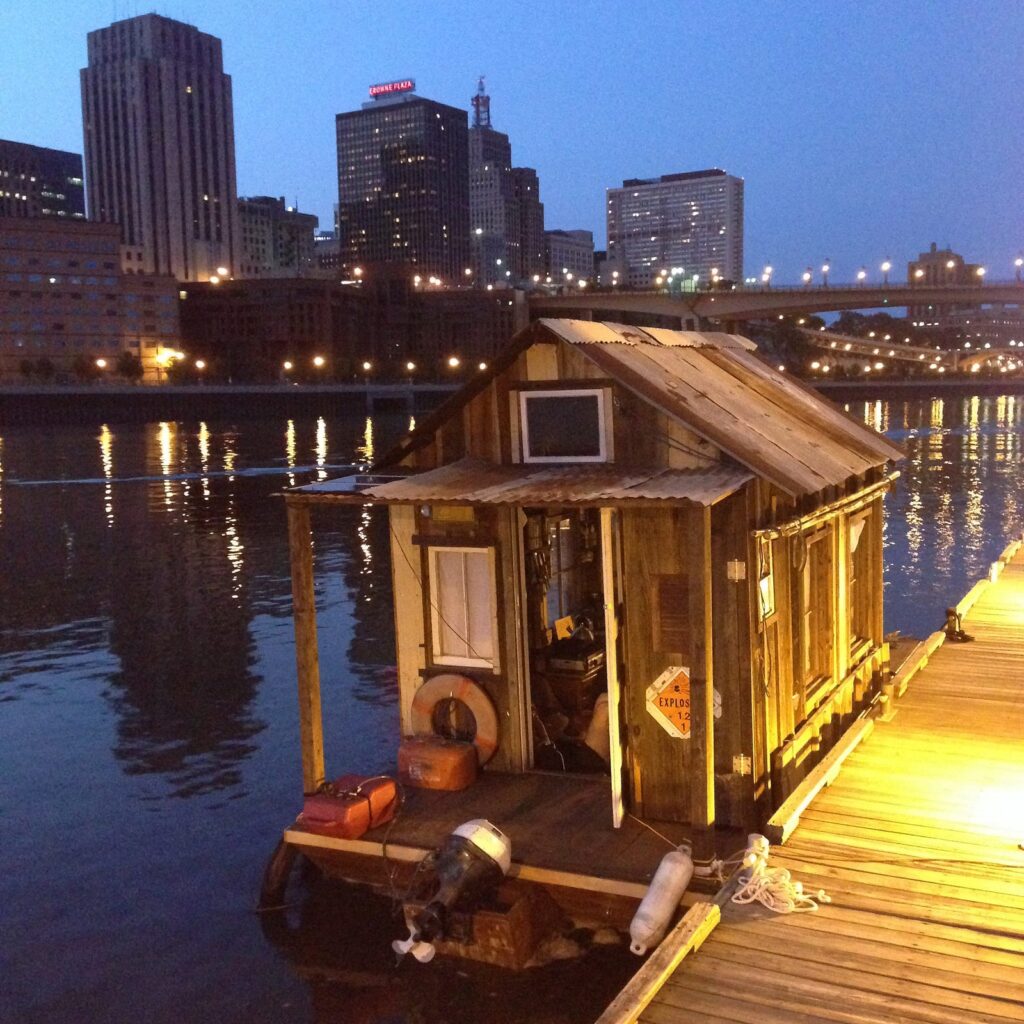
But far from satisfying an itch, this summer travel as part of my practice just seems to whet my appetite. We move through towns small and large and they all have a unique flavor and attitude. Some places are indifferent to our visits, and others are inexplicably open and welcoming.
In this little town, people shower us with generosity, but in this other seemingly identical town a little ways downriver, we can’t even get directions to a good inexpensive restaurant. In Murieta, Ohio on the banks of the Ohio River, within an hour of our arrival, we’d been invited to a hoe-down, made a half dozen new friends, had offers for food and laundry, and had an impromptu exhibition set up. In Savanna, Illinois on the Mississippi River, within a few days of our arrival, we’d been invited to parties, strangers visited the boat to bring us homegrown fruit and vegetables, fresh-baked bread, and books, and invited us to stay as long as we liked. It makes us wonder, is this our place? Could we live in these little welcoming towns? Could we live in Savanna or Murieta, Florence, Alabama or Clinton, Iowa?
On my shantyboat travels, I’ve certainly met people who feel stuck in their hometowns or in their lives. They are not thinking “Where in the whole wide world do I live?” They’re thinking, “How do I survive?” That’s real.
I’m an able-bodied straight white person socialized male in 20th century United States, born to upwardly mobile middle-class white people who liked to travel and see new places. I carry a whole lotta privilege, some of it largely unexamined. While I was raised lower-middle class, with periods of pretty serious poverty, while I’ve lived paycheck to paycheck the entirety of my adult life, and while I’m still saddled with college loan debts 30 years after I graduated from school, I did go to a decent college and eventually grad school. I was never homeless for more than a few weeks, never struggling with mental health or addiction. So while I’ve had some hardship, I’ve also caught a lot of breaks.
I’ve spent more than half of my work life in jobs where I didn’t have to lift a shovel, a hammer, or a tray of dishes. I’m a working professional, who, since the pandemic, does some of their work remotely. So I’m in a position where I can consider blithely where to live and maybe even successfully make that happen. That’s a privilege not everyone has. I’m grateful to be this fortunate.
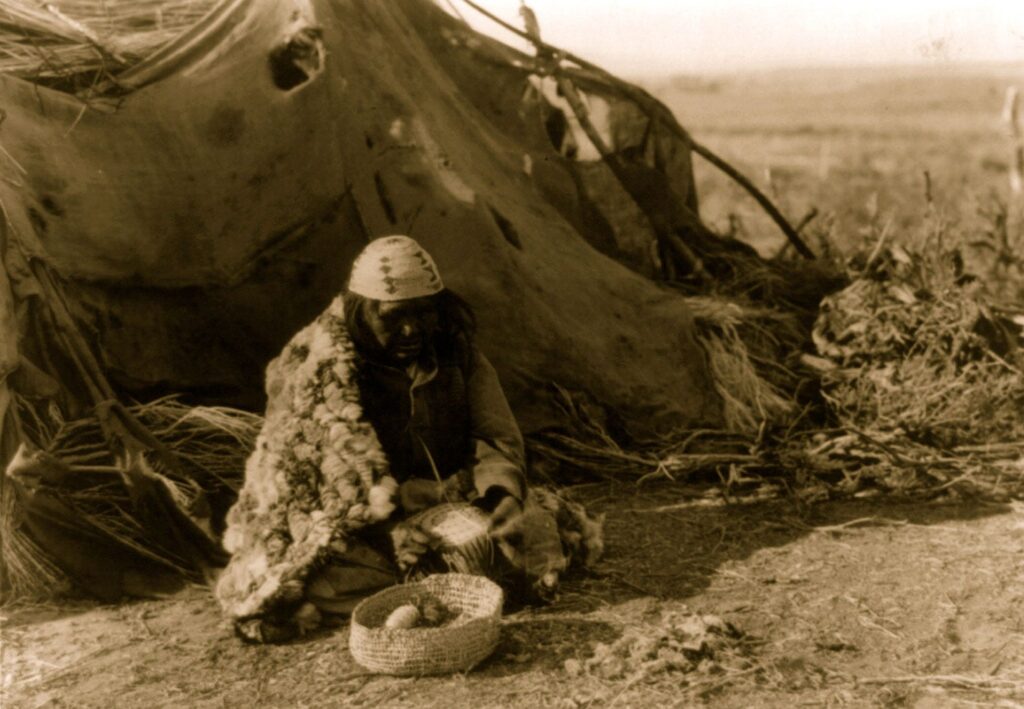
Also implicit in this thesis, is the unquestioned ability to move around freely on this continent, to settle at will, to bring my culture with me, or even to buy a chunk of it.
I can buy property in this country without considering the legitimacy of the system of buying and selling that land, without considering who may have come here first, and without considering the cultures I may be displacing. Who owned this land? How did they get it? Who did they get if from? Was it even theirs to give? Was it once the territory of indigenous communities (likely)? Was it part of a historical commons, now privatized (maybe)? Even if we know, what do we do about it? We don’t ask these questions because they are uncomfortable and complicated. All inquiries of this nature tend toward an overarching, “What’s the point?” That is to say, we believe that these lands have been laundered by historical complication.
Asking and answering these difficult questions is important, even if solutions do not immediately present themselves. It is difficult to sit with that complication and discomfort, but it is literally the least we can do as settler-colonists in this land. New questions may present themselves: How much can I learn about the complicated and heartbreaking history of my home? How can I honor the cultures I am affecting by my presence here? How can I tread lightly? How can I open up space for others? How can I carry the knowledge of what was here into the future to affect what might be yet?
A Futile Attempt to Harness Science
All these places I’ve visited or lived or heard from friends are amazing places complicate my future. Where do I want to be? Minneapolis is an amazing town. It has a great art community, I’ve made artist friends and art connections, and, of course, there’s university work there. Same with New York City, particularly Brooklyn. I want to live in the city, but I also love the country. I really want a little land and a barn. I want enough room to have a few rusting shitty cars in the back 40. I miss the activity and spontaneousness of the city, but also the serenity, quiet, solitude, and open horizons of a rural retreat. How do I balance these desires? Enter science.

Decades ago, when facing a difficult decision of which college to go to, I wrote a computer program to help me make the difficult choice. I had been accepted as a transfer student to both UC San Diego and UC Santa Cruz. San Diego has the better computer science program at the time and was a more reputable school so it was my most likely choice. I’d been to visit Santa Cruz and loved the redwoods and the cozy vegetarian restaurant and the laid-back vibe. I wrote Decision-Maker to help me weigh all the considerations, an objective result based on admittedly subjective considerations. Into the program, you input your choices, all of the considerations, how much each mattered, and how each choice rated with regard to each consideration. The program used information you already had to create a weighted matrix, ranking your possible choices.
For my college choice, I had considerations like Academic Ranking, Size of the Academic Program, and Areas of Concentration. Decision-Maker definitively kept coming up with UC San Diego by a wide margin. And I kept trying to fudge the numbers. I was drawn to the environment of UC Santa Cruz, but had only entered academic considerations into my decision-maker. In computer science, the saying goes, “Garbage in, garbage out,” that is, nonsense input data produces nonsense output. I had omitted the considerations that were really most important to me. I wasn’t being honest with myself and so I methodically produced a lie. Once I entered my true considerations, Redwood Forests, Hippy Culture, and People Playing CSNY on Guitar, UC Santa Cruz won by a landslide. Clearly, I already knew the answer.
Try the Decision-Maker web application.
Over the years, I turned the Decision-Maker into a web application and a spreadsheet. The web version was for people who liked a bit more hand-holding, but I personally preferred the spreadsheet so I could see all my ratings and values at once.
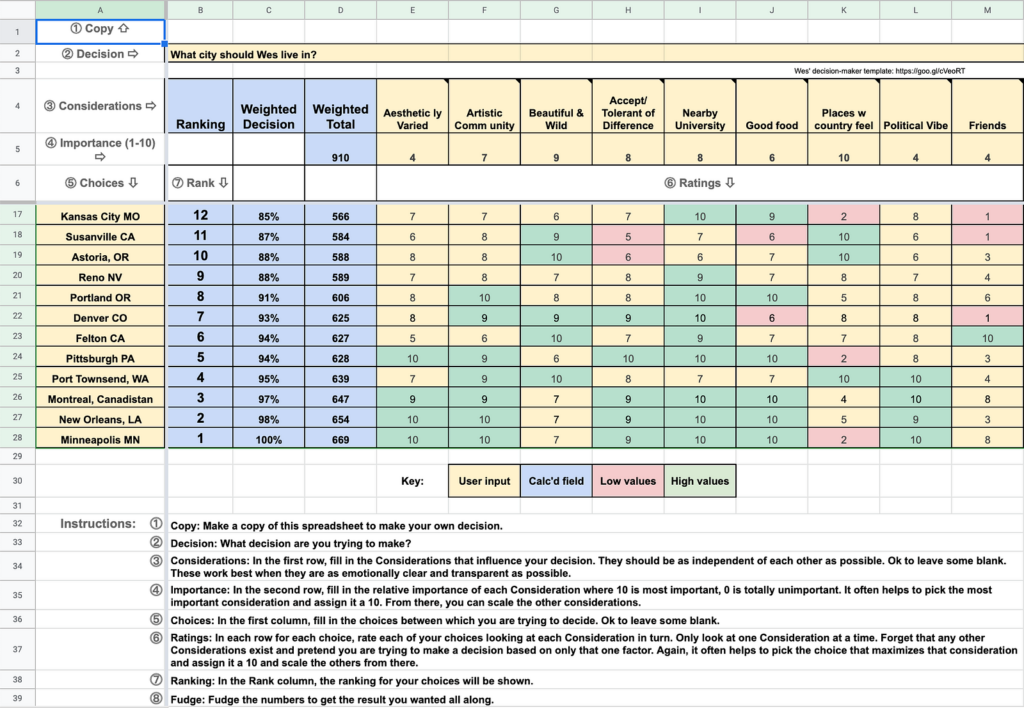
Naturally, I’ve turned to the Decision-Maker to answer the perennial question of where to live. All these conflicting and complicated criteria. Where do my friends live? Is there space for my barn and rusty cars? Is there a good Thai place? Can I avoid conspiratorial Qanon nutbags? Is there work for me?
Try your luck with the Spreadsheet Decision-Maker.
I was even able to calculate some of the values from less subjective data sources. The data is out there. I’ve long recognized that I am solar-powered, so Days of Sun numbers came from NOAA. I want to live with people who have a range of life experience, so Ethnic Diversity numbers came from U.S. Census data. Affordability came from comparing median home prices to median incomes. Decision-Maker already involves so much subjective input, the more objective data I can use, the more reliable it feels.
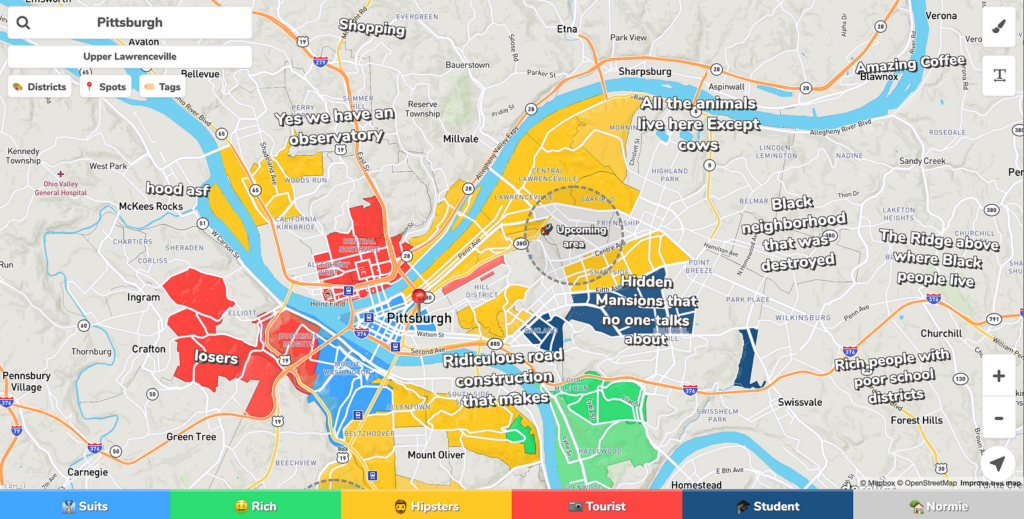
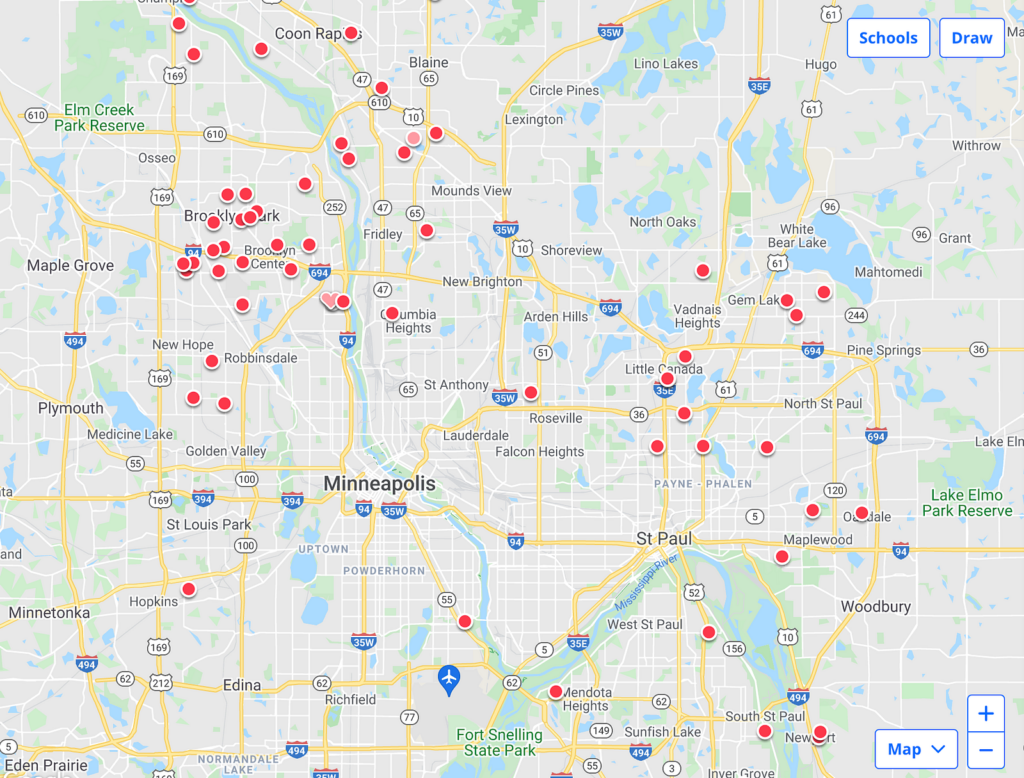
The problem is that in a big town like Pittsburgh or New Orleans or Minneapolis, the vibe changes a lot by neighborhood. In one area, there’s no good food within easy biking distance, but in another there is. In these big diverse cities, there may even be a neighborhood with a more rural feel, or a light industrial area dotted with the occasional barn and open field. It is hard to capture a whole city with a few numbers. Even with smaller towns, there may be areas at the edge that are very different. For instance, my little dreamy cabin is in a tiny mountain town a few miles away from a medium college town that ranks below 10th in my spreadsheet.
So the Decision-Maker only takes you so far to help choose places to live. You still need to go there, make friends, get coffee, explore the farmer’s market, walk in the woods, and look at houses in different neighborhoods. But that still may not be enough.
The Questions; The Contradictions
I have friends who are all struggling with some variation of this question. How do we live in the country and the city? How do we get cicadas in the summer and West Coast mild winters? How do I experience the adventure and history and beauty of living near a big river and the wide-open horizons and subtle variety of living in the desert?
We all want to travel and explore and split our time between lots of places rich in culture and adventure, but also want to be rooted in those places. We don’t want to be tourists, but people connected to those places who know where the best deli is, the better hardware store, the best swimming hole. The conventional thing to do is to pick a place, buy a house, make that space your own. But what place? And what about other places? And what about the other other places? And what about my friends? This is the shape my conversations with friends have taken.
We‘re cruising Zillow in New Orleans, Minneapolis, and Portland, Oregon, Astoria and Port Townsend, rural Maine and upstate New York. It’s absurd, knowing as we do that starting over is exciting but also exhausting, and a new place risks offering us less than we have now. But perhaps just thinking about it is the point, an escape fantasy with no formal shape.
I want to live in the desert with lots of space and a barn, and I want to live in the city with culture and interesting work, and I want to live near people to collaborate, and I want to have solitude and be far from everyone. And I’m not alone. How do we make all these contradictions possible?
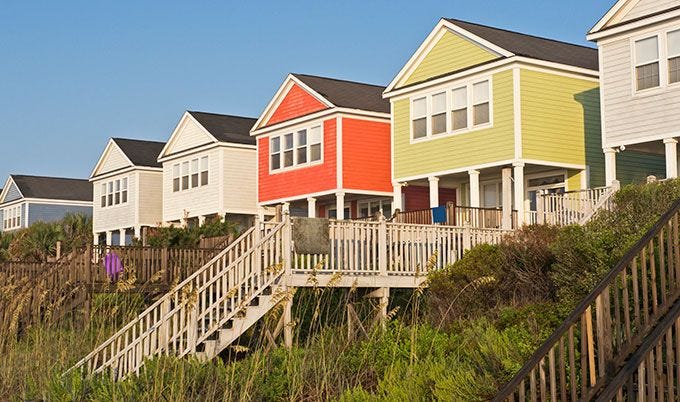
Wealthy people buy vacation homes. We aren’t wealthy and don’t really want to be. We have no interest in owning a house sitting vacant until our whims dictate that we visit. It is exploitative, wasteful, and goes against our frugal values. The same goes with renting. A rented house is a house I can’t use. I have no interest in owning an investment property, something stocked away, acruing equity for some future day. I’m only interested in use-value.
On top of that, owning a vacation or rental house is a burden. Did the pipes freeze again and flood the basement? Did anyone break-in? Are the gutters full of leaves? Will the waterheater hold out? I’m interested in more freedom, not taking on more burdens.
A Seed of Possibilities
We ask ourselves all the time, “Who are our people?” The friends I know who used to live in this little beach town, one of the most expensive places on the planet have all been priced out and are scattered to the winds. At some point, they each have recognized that there was no way they would ever be able to afford their own home here. So now folks I know bought old houses in upstate New York, rural Maine, Northern New Mexico, Northern California and Southern Oregon, rural places and small towns all over the continent. How do we find a way to spend time with these folks and live a rooted existence?
But maybe we’re welcome to visit and stay awhile. We can help them replace a floor or build a guesthouse, or help a bit with their mortgage. We can share our lives periodically, living with them for a time, sharing company and food. We can offer them a place when they need a break and they can help us out some.
A house that can be shared, that I can stay at for a few days or a few months, a place with a room that is mine with a few books on the bedside table in a place that I’ve gotten to know and love looms large in my imagination.
Not just one place, a few places. A place in the city for connection and collaboration. A place in the country for solitude and working on big ideas. A room in a house here. A little guest shack there. The house here in the coastal mountains where maybe I spend most of my time. A place where I can set up a tent in the back 40.
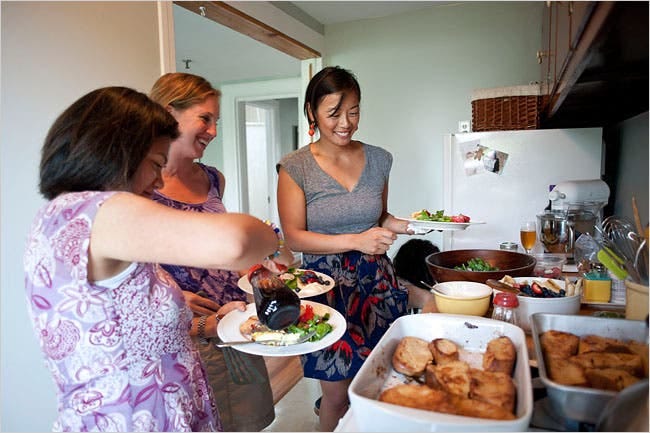
I imagine those places are shared with and lived in by people I love, people I get to see when I visit. These are people who are part of our family we chose in this life, some close, some more distant, but all connected and familiar. We come down to make breakfast and find our housemates are already up and made coffee, “Oh hey,” they say, “When did you get up?” We have a cuppa and start making breakfast for everyone. Or at least that’s how I fantasize about it, based at least in part by my experience staying at a house in Minneapolis owned by Brakeshoe who did exactly this.
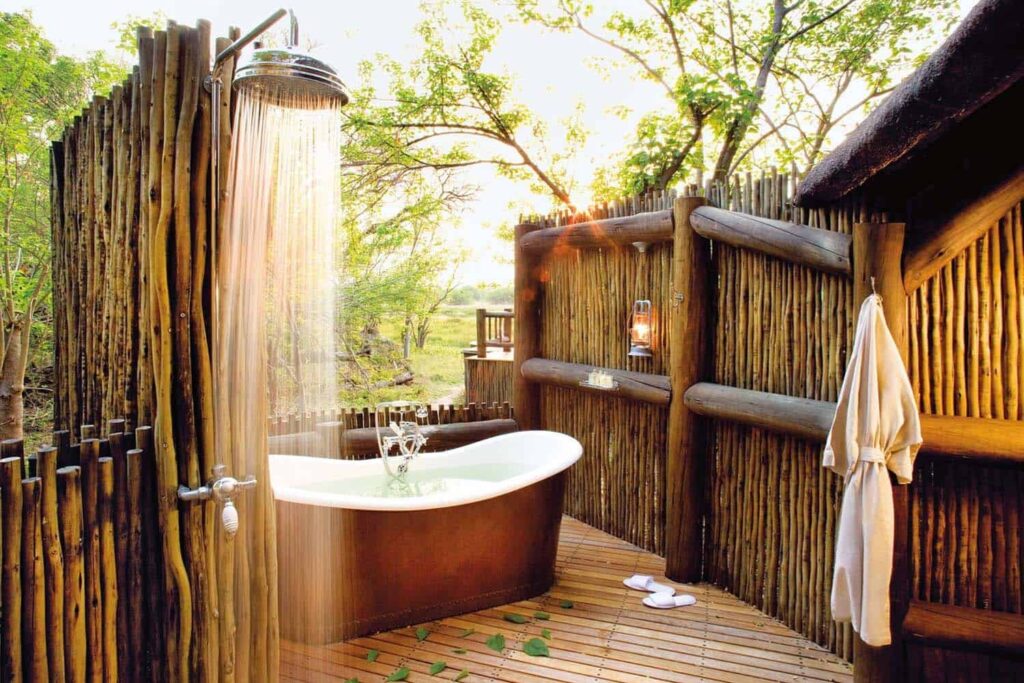
As relationships are fluid, so could be our migrations within our own network of shared houses. I imagine there is a place I stay at primarily, a place like my little mountain cabin that over decades I’ve loved and improved. A place we’ve made gardens and put in an outdoor shower and bath, a guest shack for visitors or a room held down by a sporatic housemate. And in those times when we are traveling or staying in another house, who will take care of the animals? Who will water the garden? Who will keep the firewood stocked and leaves off the paths and the roof?
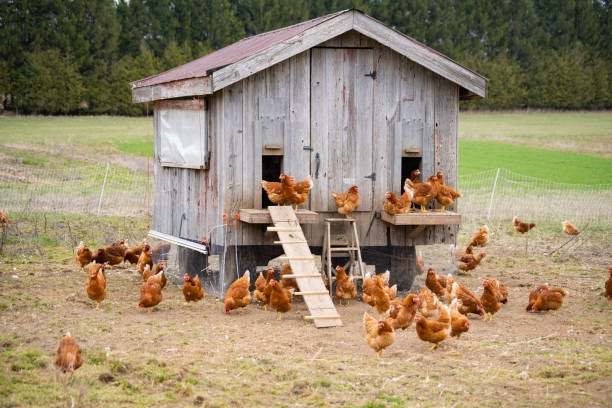
I could imagine one of the people in my network might want to stay and keep the home fires warm at my house, one of my close friends who’d be excited to take care of animals and keep house while we travel. Maybe they even keep a room at my house, or maybe they keep a few things in the guest shack. And maybe at their house, I keep a few things for when I come to visit. Or maybe I have a guest shack I helped build and when I’m there, I help take care of things. I help build what I can, help make improvements. Maybe I offer to take care of their house when they are traveling.
I can imagine that occasionally friends might ask to have a friend stay in their room, people who they trust and know I’d like to meet. I might do the same, occasionally asking folks in my network to host a traveling friend of mine. This is how I got to know a bunch of good people in Minneapolis.
Organic and Fluid Arrangments
There is no business plan here, nor am I proposing some kind of timeshare. This is not about quid pro quo. Erase from your mind the idea of a formal network of trade or exchange. I’m not proposing a network of squats nor couchsurfing.com (but not completely dissimilar either). The difference is that these are not merely places to squat for the night, but an arrangement for sharing a love for a place, a feeling of being truly at home in more than one place.
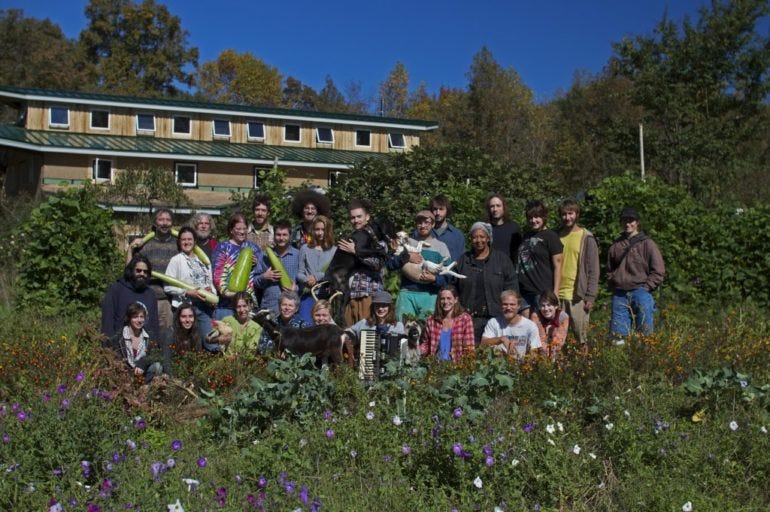
I’m not even proposing land projects or co-housing, which I’ve seen a good number fail. Going back decades, I’ve seen people start land projects enter into joint financial arrangements for shared housing, folks who started with wonderful intentions, fall completely apart. I think problems arise mostly from interpersonal conflicts that don’t have a built-in escape valve. Problems simmer for a long time until they reach a boil. Good friends who have natural conflicts never get much of a break from each other, and jointly owning a home exacerbates those conflicts. I think land projects have their place, and I’m sure they work for some folks, but that’s not what I’m thinking.
This is less of a formal scheme than a shift in the way we view our homeownership. This is more along the lines of the anarchist concept of mutual support. Agreements between homeowners are individual and unique, not uniform. They need not even be symmetrical. One homeowner may only share with one person, while that person may share with lots of folks. Like our relationships, agreements should be organic, natural, and fluid.
I think there are exciting possibilities in homeownership that is shared in a limited and explicit way. I picture primary residents of a home, people with a vision, a home they love, and a desire to share it, opening their home to others.
Polylocational Living is what I’ve been calling it, a non-monogamous approach to housing. Or you can also think of it as Rooted Travel. A tourist is a traveler who is perpetually out of place. Rooted Travel is moving in space as a person who shares a connection to the many places in which they live.
I can see all sorts of problems that can arise, and you probably can too. What happens when you have conflicts with the people with whom you share a home? How do you work out differences in the vision people have for a home? If someone keeps a room at a house, should they also offer some regular help to support the house? Like with any good relationship, communication, honesty, frequent check-ins, and fluid arrangements are helpful. Working with people you absolutely trust is critical.
In the grand anarchist tradition of offering a vision without prescribing all the solutions to problems that can emerge, I offer this vision of a way we can share our lives and our love of the places we’ve grown to know.
Originally published on Medium, January 9, 2022.